
Discover Automation
Integrated Bridge Systems
An Integrated Bridge System (IBS) brings together navigational, sensor and control systems into a single, harmonised operational environment. By centralising information and control functions, an IBS improves situational awareness, operational efficiency and safety on the bridge, supporting decision-making for all phases of vessel operation.
Subsea Connect delivers Integrated Bridge System solutions that are tailor-designed and engineered to meet the needs of merchant, cruise, offshore and specialised vessels. Our approach ensures reliable performance, clear operator interfaces and flexibility for both newbuild and retrofit projects.
What Is an Integrated Bridge System?
An Integrated Bridge System combines multiple navigational, communication and monitoring subsystems into one centralised platform. Rather than operating each piece of equipment independently, crew members have access to consolidated information and control from multifunction workstations. This includes data from radar, electronic charts, positioning sensors, autopilot systems and other navigational inputs.
The core purpose of an IBS is to:
- deliver a unified view of navigational and safety-critical information
- reduce operator workload through structured, ergonomic interfaces
- support safe and efficient vessel handling under all conditions
Centralised Navigation & Control
All key navigational elements — including radar, ARPA, ECDIS (Electronic Chart Display and Information System), conning data and heading information — are accessible from multifunction workstations. This unified view enhances situational awareness and streamlines bridge operations.
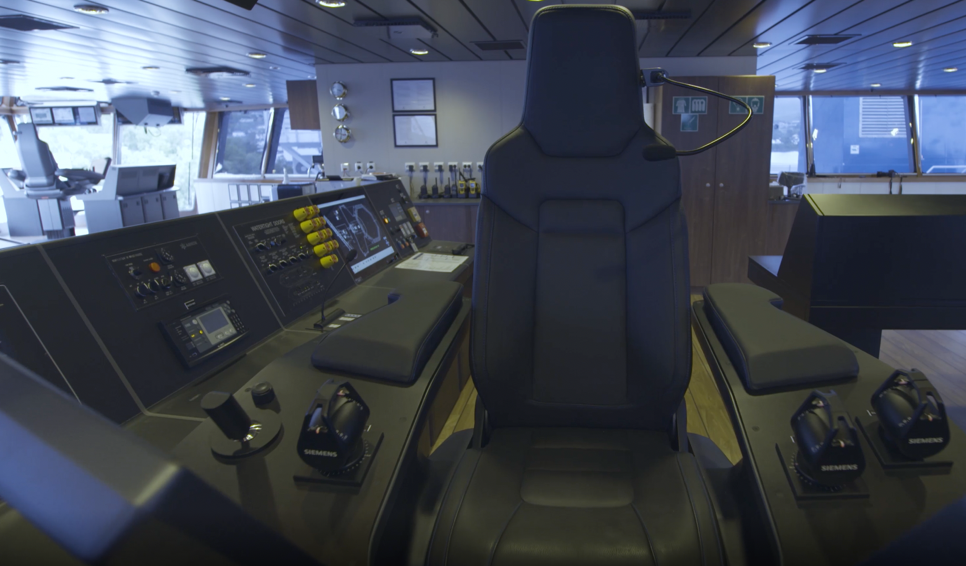

Flexible Workstations
Modern IBS solutions use modular, configurable workstations that support multiple applications on the same screens. Operators can switch between navigation, monitoring and control tasks without losing context.
Redundancy and Reliability
In accordance with good marine practice, integrated bridge architectures typically include dual-redundant networks and hardware designed for continuous operation. Redundancy ensures that no single failure affects the overall system’s availability or safety.
Human-Machine Interface (HMI)
Ergonomic design and consistent user interfaces across consoles help reduce the risk of misinterpretation and support rapid decision-making. Intuitive menus, clear alerts and flexible layout options make the bridge easier to operate in a range of conditions.
Where Integrated Bridge Systems Add Value
An IBS enhances bridge functionality across vessel categories, including:
- Merchant vessels and bulk carriers
- Cruise and passenger ships
- Offshore support and supply vessels
- Specialised vessels with complex monitoring needs
By centralising important data and control functions, an IBS supports both routine navigation and high-pressure operational scenarios.


Customisation and Tailor-Made Solutions
Every vessel bridge has unique requirements based on layout, size, operational profile and regulatory needs. Subsea Connect engineers IBS solutions that are tailored to vessel specifications, including:
- Choice and arrangement of displays and workstations
- Integration of navigational, automation and monitoring subsystems
- Interfacing with propulsion, thruster, DP and alarm systems
- Ergonomic design adapted to operator workflows
This tailor-made approach ensures the system fits the vessel’s bridge layout and crew practices, rather than forcing a one-size-fits-all solution.
Integration with Vessel Systems
Integrated Bridge Systems are designed to interface seamlessly with a vessel’s existing sensors, navigation systems and control networks. Typical integrations include:
- ARPA radar and tracking systems
- ECDIS and chart systems
- Heading control and gyro inputs
- Autopilot and joystick control
- Communication and alarm systems
By connecting these systems, an IBS provides operators with a holistic view of navigation and vessel status in real time.
Retrofit and Lifecycle Support
Subsea Connect supports IBS retrofits and upgrades, helping operators modernise existing bridges with advanced integration and improved functionality. Retrofit projects are engineered to minimise disruption and are aligned with existing vessel systems and operator needs.
We also provide ongoing support, training, spare parts and lifecycle services to ensure the bridge system remains reliable throughout the vessel’s operational life.
Operational Safety & Efficiency
An Integrated Bridge System contributes to safer and more efficient vessel operation by simplifying navigation tasks, improving situational awareness and reducing manual workload. With data harmonised from multiple sources, operators can make informed decisions quickly and confidently.
See all our areas of expertise
Navigate the ship
